Friday, February 10, 2012

Sea Kayaking with Gordon Brown Volume 1 – Sea Kayak Handling


Gordon Brown is one of Scotland’s premier instructors. He has the highest achievable certification by the British Canoe Union, and is the only American Canoe Association certified coach in Scotland. This is his second video production, having produced a sea kayak rescue video “Over… and Out” in 1993. He also has a third DVD on rescues and towing which California Kayaker will be reviewing shortly (and has plans for a fourth on navigation). He is the author of Sea kayak – A Manual for Intermediate and Advanced Kayakers. Gordon owns and operates Skyak Adventures on the Isle of Skye.

The Sea Kayaking with Gordon Brown Volume 1 – Sea Kayak Handling video covers the foundations of sea kayaking – paddling, turning, steering, edging, etc.

They recommend watching the video in its entirety first, which switches between a chapter on a lesson and a chapter on paddling a stretch of the coast of The Isle of Skye. Then you can go back and re-review any instructional segments you need to. It is easy to select among the touring and lessons chapters from the main menu.

We followed this process when we viewed the DVD. Our reviewers enjoyed the first viewing because it showed an interesting area that we will not likely ever paddle. The alternating instruction and adventure chapters also kept either from getting tiresome.

The production quality of the video is very good. Very little wind noise or other background noises that many other kayaking videos have. The video quality is also quite good. They use an excellent mixture of on boat and on land cameras to make sure the right angle is provided to ensure the subject being talked about is understood.

The progression from paddler position in the boat to maneuvering around rocks and the presentation are logical and clear. Gordon does away with any right-left confusion by using red tape to identify the left side of the boat and paddle and green tape to identify the right side. Despite the clear progression and helpful use of colored tape, only the first two instructional chapters, paddler position and forward stroke, are for beginners. The entire DVD seems more geared toward intermediate and advanced paddlers and instructors.

One reviewer, an instructor for a local shop commented that “it is easy to pick up refinements in presentation from the video. For example, after the first viewing, I incorporated some of his instruction about boat edging versus boat lean in my class the following weekend.“

Overall, this video would be an excellent addition to a sea kayaker’s library. We don’t believe that any video could replace time in a class or 1-on-1 with a coach, but this video comes close.

Despite the generally good sound quality, there were a few words we missed. To help those of us who don’t understand the Scottish version of English, there is a free PDF transcript available from Gordon Brown's website.

Here is the trailer for this video:


You can purchase the Sea Kayaking with Gordon Brown Volume 1 – Sea Kayak Handling DVD at you local kayak shop for $29.95 or online from www.seakayakwithgordonbrown.com.

Friday, December 16, 2011

Body Boat Blade Sea Kayak Rescues video review

Ok, anticipation was high when we received a copy of this DVD. Shawna Franklin and Leon Somme are co-owners of Body Boat Blade International, a kayak shop in the San Juan Islands of Washington that is well known for quality, high level instruction. The videographer is Bryan Smith of Reel Water Productions, who was behind the Pacific Horizons and Eastern Horizons films, both well done sea kayak porn worthy of adding to your library.

So, did the DVD live up to our expectations? Let's take a look at the good and the not so good:

The Good
The camera work and editing was excellent. The shots were clear, didn't look like they were taken through a salty lens, and the cameras were well-positioned. The look of the videos was better than most we've seen. And the sound was also excellent - no wind noise, appropriate volume, etc.

The opening scene of the paddler getting flushed out and separated from the kayak was a excellent way to catch the viewer's attention. And it was good to see rescues in challenging conditions. Classes generally teach how to rescue in flat water, but you aren’t as likely to wet exit in flat water as you are in waves and currents. Good reminder that we should practice the rescues in these tougher conditions.

The video had a good discussion of toggles and decklines – what they do and why you would want them.

The Not So Good
This video claims to “give all the tools” one would need, but we found that it doesn’t meet this goal. I guess that would be a tall order for a 30 minute long video (plus 5 minutes of extras). This video shows a variety of rescues in conditions varying from flat to advanced, but doesn’t provide the details one would need to learn these rescues from scratch.

If you are a novice paddler, watching this video may be good to show you the types of conditions that a sea kayak can be rescued in, but won’t do much to get you ready to do so. The Sea Kayak with Gordon Brown Volume 2 video, which also covers rescues, would be better. California Kayaker Magazine will be running a review of the Gordon Brown volume 2 video in the upcoming Spring 2012 issue (and the volume 1 video in a future blog post here).

We do think the Body Boat Blade Sea Kayak Rescue video shows much that an intermediate or advanced paddler could make use of, but they would likely need to watch it a few times to catch the details. For example, they sometimes use the heel-hook re-entry, sometimes the classic lunge on the back deck, and from time to time the swimmer will get back into their boat from between the two boats. Nothing is mentioned on when or why you would use one over the other, but it is good to see them done so you can get some info that will hopefully give you some things to try the next time you are doing rescue practice. No one rescue method works in all situations, so having multiple ways of doing a rescue in your repertoire is important.

You can take a look at the video’s trailer below:


Summary
Get it if you want a complete library of every sea kayak DVD out there. There are much worse ways to waste 30 minutes than watching this DVD.

Don't get it if you are looking for the 1 DVD that will teach you everything you need to know about rescues. The Gordon Brown video will be better for this, but in reality taking a rescue class would be much more useful, as they not just teach you, but also make you try the rescues.

Tuesday, November 15, 2011

Review - Cobra Surf Ski

This is the first of what we hope to be many reviews that will be posted on the California Kayaker Magazine blog. These reviews will be on various kayaking-related products that we weren't able to publish in the magazine for one reason or another, but are still on products that might be of interest to our readers.
This first product we are covering is the Cobra Surf Ski. Beyond the duck-billed platypus’s nose, what intrigued us was that it was made of rotomolded plastic. We though this might be a good entry-level surf ski – a boat that provides the speed and training benefits of a surf ski, using a more rugged material at an entry-level price.

First, what is a surf ski? Wikipedia describes them as “Typically 16½-21ft long and only 16-20" wide, surf skis are extremely fast when paddled on flat water (only an Olympic K1 or K2 kayak is faster) and the fastest paddled craft available over a long distance on ocean swells. They track well but are less maneuverable and have less transverse primary and secondary stability than shorter, wider craft. Despite its typical instability, a surf ski (with an experienced paddler) is a very effective craft for paddling in big surf. Its narrowness and length helps it cut or punch through large broken waves. Double bladed paddles are used, often with highly contoured wing blades for extra efficiency.”

Two reviewers tested out the boat. They were PD (6’ 220 lbs, surfski novice) and KL (5’5” 125 lbs, owns a Futura brand surfski which is used for fitness paddling).

Form and Fit:
PD: The boat fit me well, but there was not much more room to move the foot pegs for anyone much taller than I. I am also at the stated weight limit for the boat, but it seemed to work fine. Likely I was sitting lower in the water, so had a wetter ride, than someone lighter would have.

KL: The seat cup back was more comfortable than my Futura.  It didn’t have a back band, and felt like it needed one less than my Futura (which doesn’t have one either). The seat bottom on the Cobra was a little uncomfortable, as I could feel it flexing and if felt like I was riding on my tailbone. Seat padding would probably fix this.

KL: The foot peg adjustments are great if you rarely adjust. Replacing the allen-head bolts with wing-bolts (like what is on the Futura) would make adjustments more convenient.

Performance:
PD: The Cobra definitely feels like a surf ski–in other words, fast and tippy. In the half dozen times or so I have paddled it, I never flipped over, but it does feel unsteady until you get used to it. As I have often heard, surf skis are much more steady when you are moving, and that holds true for this boat also.

KL: The Cobra felt more stable than my Futura. It weighs about 10 lbs more and is a couple feet shorter. I didn’t do a head to head comparison, but it likely was somewhat slower than my Futura, as would be expected from a boat that is shorter, heavier, and wider. Still, it seemed to take much less effort to paddle it than to move my 68 lb sea kayak.

PD: I tracked speeds with a GPS and found that I was between 0.5 to 1.0 mph faster in the surf ski over a distance than I am in my 17’ 6” touring sea kayak. May not sound like much, but that is about a 20% increase in speed!

PD: We did do recovery practice to make sure that should we flip over, we would be able to get back on, and we were able to do a cowboy scramble type recovery. It takes a little more balance than a sea kayak, but with the low deck and being a sit on top, it in many ways is easier than doing this type of recovery in a sea kayak. For more information on how to do a cowboy scramble, see the skills article in Issue #7 published Fall 2011.

What is with that funny looking nose?
Surf skis are said to have originated in Australia and used by lifeguards for surf rescues. One of the designs they came up with was a flared nose to prevent the bow from diving when surfing down large steep waves on the way back in to shore. Most currently made surf skis now are not used in surf zones, so don’t have this design. 

To see some surf skis with these noses being paddled in large surf (about the upper limit of what these boats should be used in), take a look at a video of an Australian race series at http://youtu.be/d-6gE-nZE1k. Probably not Cobra boats in the video, but ones with similarly funny looking bows...

Who should paddle this:
This does seem like it would be a good starter boat for someone who wants to try surf skis. You pay a bit less than composite boats, but get a heavier boat. For more advanced paddlers, with the plastic being more indestructible than composite, this could be a good trainer boat or for times when you will be in more aggressive conditions (such as in the surf).

Specifications:
Length: 17'4"
Width: 20"
Weight: 46 lbs.
Capacity: 220 lbs.
MSRP: $1580


More Information and to find dealers:
http://www.cobrakayaks.com/surf_ski.html

Friday, November 4, 2011

Open Letter: Changes to California Kayaker Magazine

I am writing to announce some changes at California Kayaker Magazine. Effective immediately, the Winter 2011 issue has been canceled. And for 2012, we will only have 2 issues - Spring and Summer.

The magazine has always been more of a labor of love for me than a money-making opportunity. I’ve known from the start that this would never be something that would make me rich, but I did (and still do) have hopes that it would at some point more than cover its costs. The Summer 2011 issue did that, but unfortunately, the Fall issue slipped back into being a loss. And based on preliminary ad sales, the Winter issue would also be a loss.

Unfortunately, my other sources of income, which I had been using to keep the magazine afloat during startup, have seen cuts such that I can’t afford to carry the magazine right now.

The Spring and Summer issues have been in greater demand by both advertisers and readers, so the plan is to publish just these issues for 2012. There are a sizable number of “seasonal” advertisers who only want to promote their businesses in Spring and Summer. And readership is also higher, as more people are interested in kayaking during these seasons (and some shops in the mountains and tourist areas reopen, after seasonal closures). So the plan for 2012 is to focus on these two issues.

I am sorry that I have to make these changes. Feel free to post a comment or email to me any questions, or any comments or suggestions on how I should take this magazine forward.

Sincerely,
Peter Donohue
Editor

Saturday, September 10, 2011

California Kayaker Magazine - Fall 2011 issue

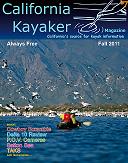
The Fall 2011 issue of California Kayaker Magazine has been published.

Contents include Cowboy Scramble recovery, Traditional Arctic Kayak Symposium, Salton Sea, comparison review of GoPro HD Hero vs Oregon Scientific ATC9K "mountable" waterproof cameras, review of Delta 10 kayak, Interview of American Whitewater's President, and much more...


About California Kayaker Magazine:

California Kayaker Magazine is a print and online magazine focusing on being the source for kayaking information for California. We are dedicated to promoting fun and responsible kayaking, and advocating for increased paddling opportunities in this region.

The stories in California Kayaker Magazine are written by local experts and include articles on places to paddle, tips on how to improve your paddling experience, and information of concern to paddlers and the local paddling environment. Covers all types of kayaking (touring, white water, surfing, fishing, etc.) and for paddlers of all levels (those entering the sport to 5 star paddlers).


More information on the magazine can be found at
www.calkayakermag.com

Saturday, August 27, 2011

GoPro HD Hero vs. Oregon Scientific ATC9K cameras

This blog post is meant to provide additional information that goes along with a comparison review of the the GoPro HD Hero versus the Oregon Scientific ATC9K cameras which is in the Fall issue of California Kayaker Magazine. This post provides the raw videos that came out of each camera, so you can get a better feel for how well they work.

Video Samples:

Below are some videos taken while the two cameras were on the front deck of my kayak. The cameras were started at roughly the same time and stopped at roughly the same time. You can watch the Youtube file to see what they look like when uploaded, and click on the name below the Youtube to download the raw video:

GoPro - Sculling Brace:

Download the Raw File: SampleVid-ScullingBrace-GoPro.MP4 (19 megabytes)
This is a boring video, but it does have the GoPro set at 1080p (unlike the videos below).

ATC9K - Sculling Brace:

Download the Raw File: SampleVid-ScullingBrace-ATC.MOV (18 megabytes)

GoPro - Roll:

Download the Raw File: SampleVid-Roll-GoPro.MP4 (17 megabytes)
ps - my apologies - it looks like I had the camera set at 960p, instead of 1080p.

ATC9K - Roll:

Download the Raw File: SampleVid-Roll-ATC.MOV (11 megabytes)

There are two more videos you can also look at - of me paddling through a tunnel in Mendocino.
GoPro:
Download the file (35 mb)
or watch it on Youtube
ATC:
Download the file (23 mb)
or watch it on Youtube


Effect of Wide Angle on Videos:

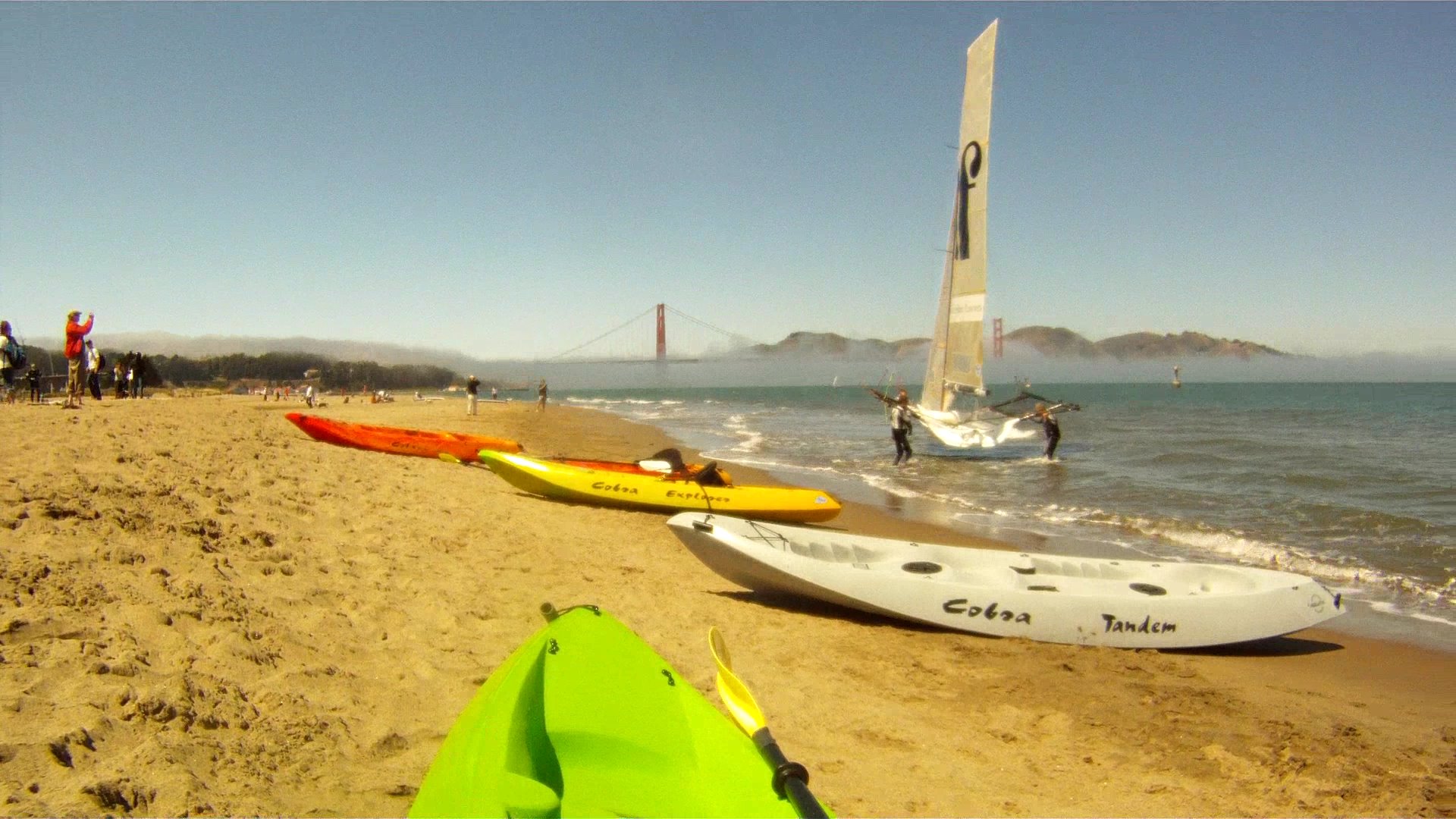
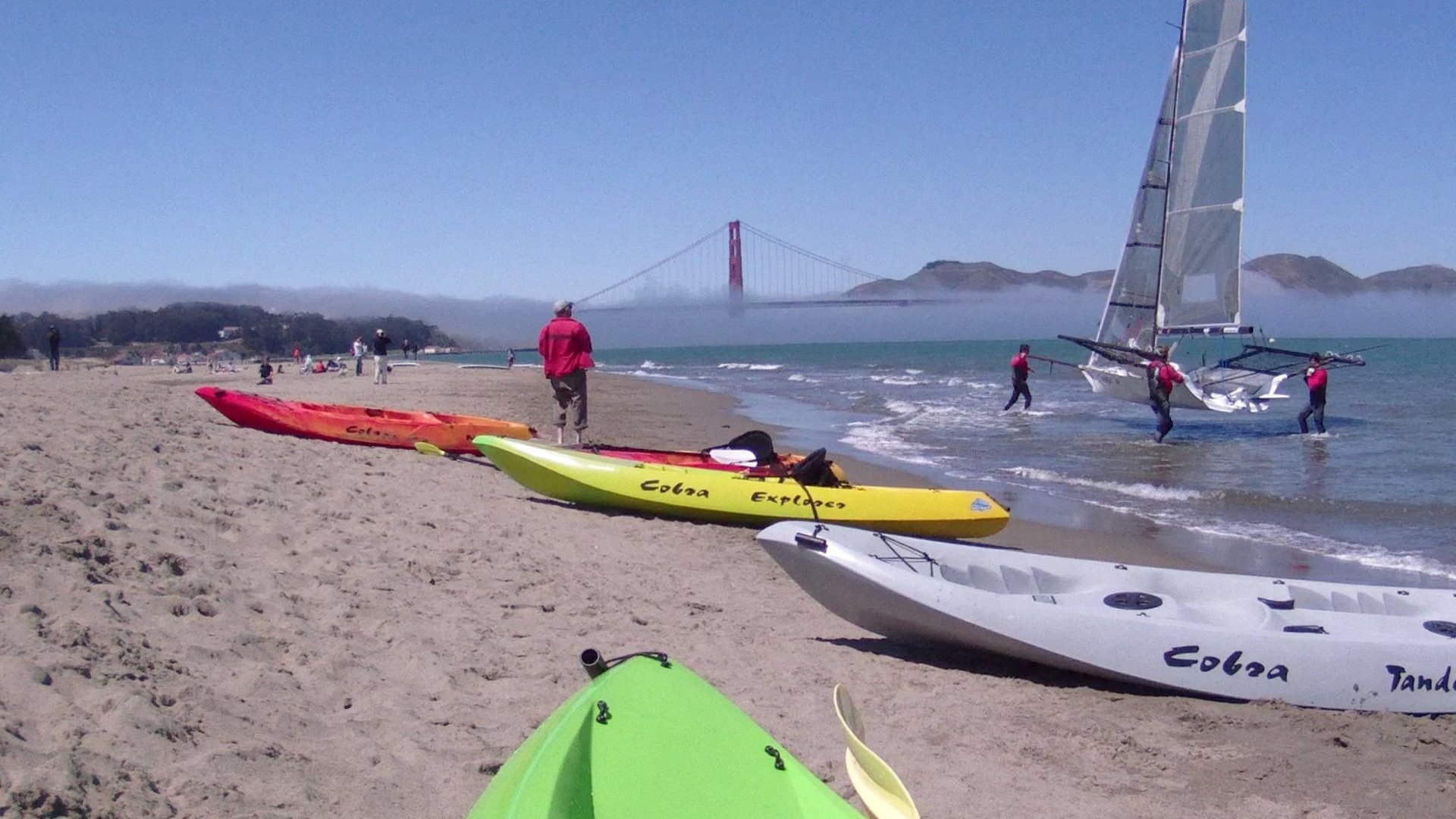
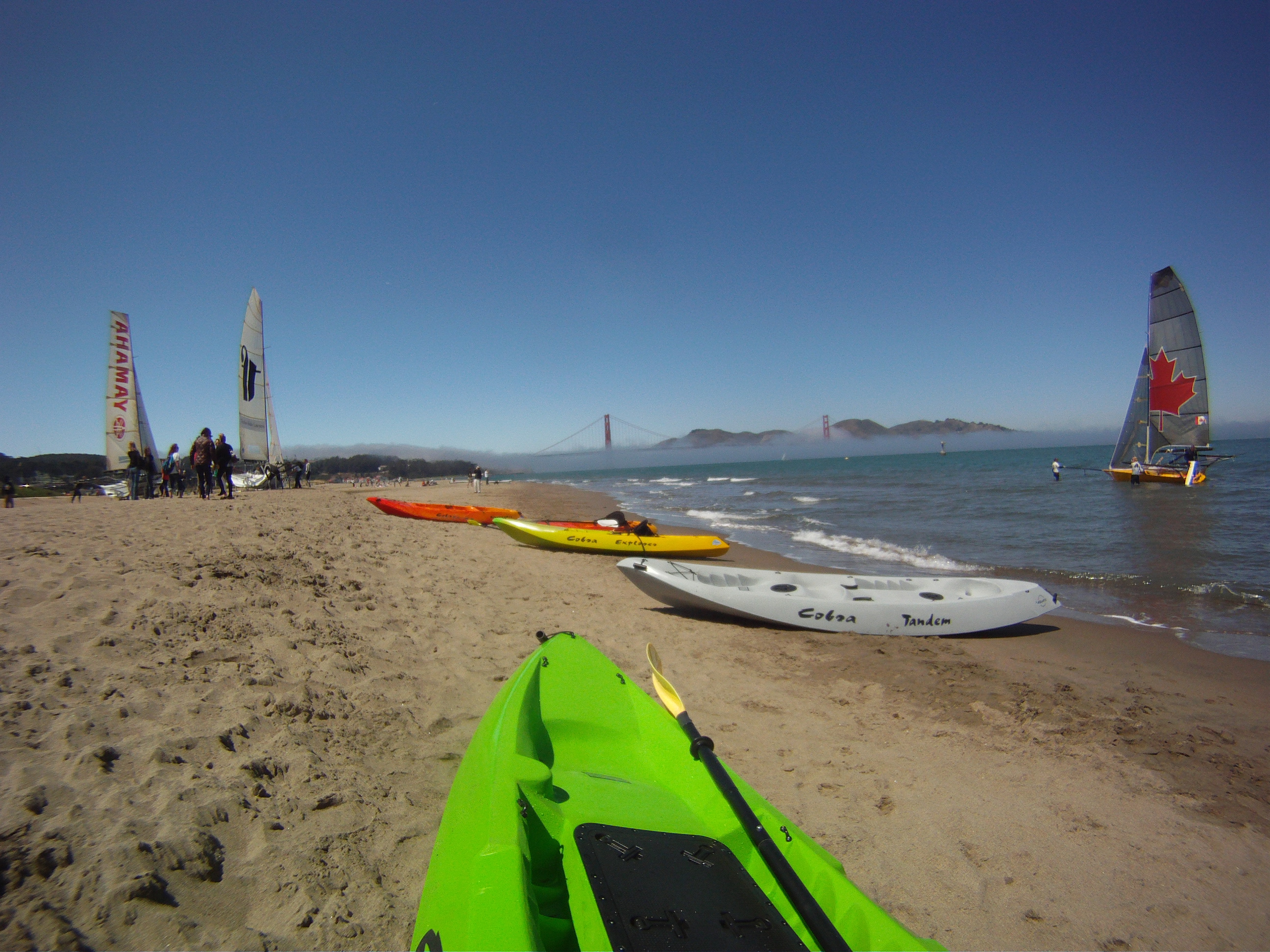
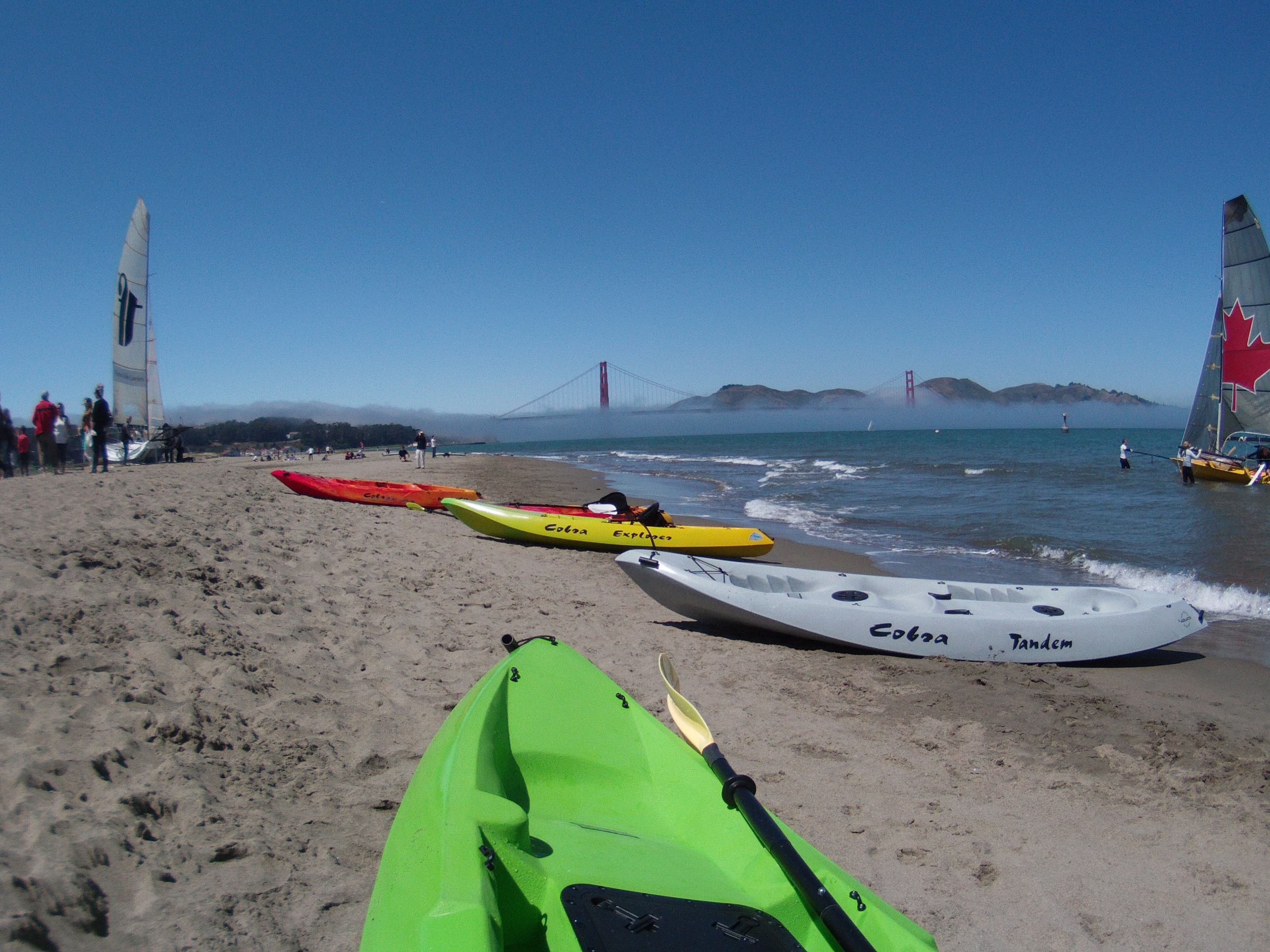
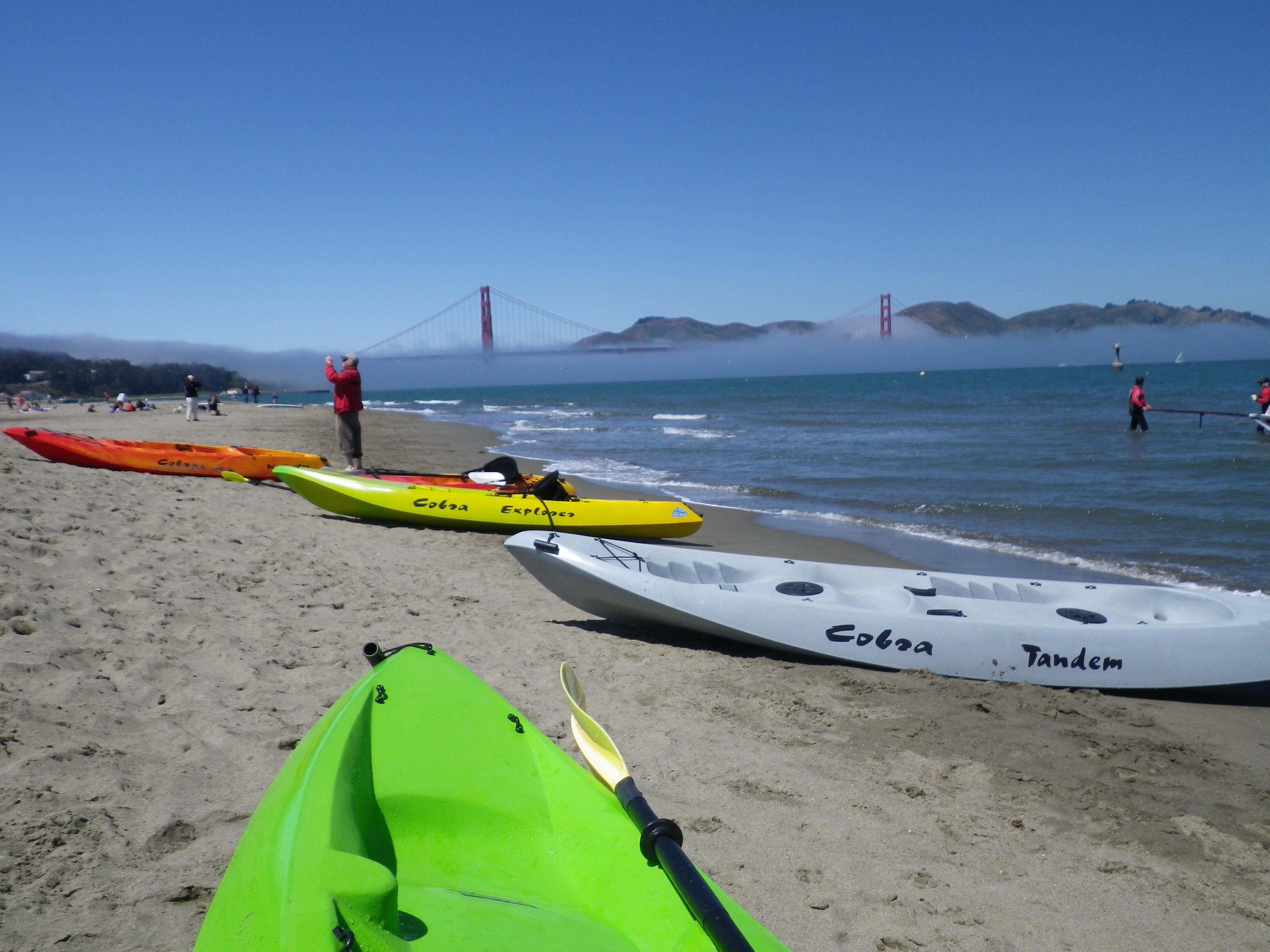
For the following pictures, we did a 3 camera comparison: Gopro, ATC9K, and a Pentax Optio WG-1 point and shoot. The Pentax was brought in for comparison so you could see the effect of the wide angle lens on the 2 mountables being reviewed.

Below are the screen shot from videos showing the effect of the wide angle lens. All were taken at highest resolution (1080p for the GoPro and ATC). We recommend looking at the variations between pictures in size on the yellow Cobra kayak and with the Golden Gate Bridge to get a feel for how items at medium and long distance would look. Click on the photo or it's file name below to open the full resolution version. These are the photos that were published in the magazine:

GoPro:
Download the Raw File: WideAngleTest-GoProVid.jpg
ATC9K:
Download the Raw File: WideAngleTest-ATCVid.jpg
Pentax:
Download the Raw File: WideAngleTest-PentaxVid.jpg


Effect of Wide Angle on Photos:

Below are pictures taken with each camera. The GoPro and ATC9K both at highest resolution setting. Once again, look at the yellow kayak and the bridge to get a feel for how the wide angle affects how things look in still photos.

GoPro:
Download the Raw File: WideAngleTest-GoProStill.JPG
ATC9K:
Download the Raw File: WideAngleTest-ATCStill.JPG
Pentax:
Download the Raw File: WideAngleTest-PentaxStill.JPG

Friday, June 3, 2011

California Kayaker Magazine - Summer 2011 issue

Summer 2011 Issue of California Kayaker MagazineThe Summer 2011 issue of California Kayaker Magazine has been published.

Contents include swimming for kayaking skills, surfing Baja, paddle ergonomics, tips for Eppie's Great Race, comparison review of Pentax Optio WG-1 vs Olympus Tough TG-610 waterproof cameras, review of Yoga for Kayaking DVD, and much more...

Download the PDF (6.5 megabytes) or Read the issue online using Yudu.com

About California Kayaker Magazine:


California Kayaker Magazine is a print and online magazine focusing on being the source for kayaking information for California. We are dedicated to promoting fun and responsible kayaking, and advocating for increased paddling opportunities in this region.

The stories in California Kayaker Magazine are written by local experts and include articles on places to paddle, tips on how to improve your paddling experience, and information of concern to paddlers and the local paddling environment. Covers all types of kayaking (touring, white water, surfing, fishing, etc.) and for paddlers of all levels (those entering the sport to 5 star paddlers).


More information on the magazine can be found at
www.calkayakermag.com